 November 3, 2026
How to Talk a Seller Out of Overpricing
How to Talk a Seller Out of Overpricing (Without Losing the Listing)
You've done the work. Your comps are clean, your adjustments are defensible, and your range is tight. Then the seller leans back and says, "We'd like to list at $950,000. We can always come down."
After more than 10 years of listing presentations on Vancouver Island, I can tell you that this moment decides more listings than any comp ever will. Agree too quickly and you inherit a listing that sits. Push too hard and the seller signs with the agent who told them what they wanted to hear.
The good news is that you don't have to choose. The goal isn't to win an argument about price. It's to help the seller reach the right number themselves, using evidence they can see.
Quick answer: To talk a seller out of overpricing, ask what they think the home is worth before you present, let your comps and expired listings make the case, and show them what an overpriced listing actually costs in time and money. Use questions instead of arguments. If they still insist, agree in writing on a short review period and a price adjustment plan.
Here's the approach I use, from the first phone call to the seller who still wants to test the market.
Why sellers want to overprice
Before you can change a seller's mind, you need to know where their number came from. It's rarely random. In my experience it usually comes from one of these:
What they spent. A seller who put $80,000 into a kitchen wants that $80,000 back. Buyers rarely pay dollar for dollar for renovations, as I covered in CMA Adjustments Explained.
What they need. Some sellers have a number in mind because of their next purchase, their mortgage or their retirement plans. The market doesn't know or care what they need.
The neighbour's sale. One strong sale on the street becomes the floor in their mind, even if that home was larger, renovated or sold in a hotter month.
Their assessment. In BC, sellers often anchor on their BC Assessment value. In Calgary, it's the City's property assessment. Neither is a market valuation of their home today.
Another agent's number. If someone else quoted higher to win the listing, you're no longer arguing with the seller. You're arguing with a promise.
"Room to negotiate." Many sellers believe starting high protects them. In practice, it usually does the opposite.
Figure out which one you're dealing with, and you'll know which part of your CMA to lead with.
Step 1: Ask for their number before you share yours
The single most useful habit I've built is asking, early and casually, "What do you think the home is worth?" Ask it on the first phone call or at the start of the walkthrough, not after you've revealed your price.
This does two things. It tells you how big the gap is before you walk into the presentation, so there are no surprises. And it lets you prepare the evidence that speaks directly to where their number came from.
If the gap is large, consider sending a short pre-listing package before you meet. A few recent sales and active listings let the seller start adjusting their expectations on their own time, without you in the room.
Step 2: Let the data deliver the bad news
Sellers can argue with your opinion. It's much harder to argue with sales they can see.
Walk through your comps one at a time, and show the adjustments so the seller can follow how each sale relates to their home. If you've chosen well, the range will speak for itself. (If you're not sure your comps will hold up, start with How to Choose Comparables for a CMA.)
Then show the two listing statuses sellers rarely think about:
Active listings are their competition. Ask the seller to imagine a buyer who has seen these homes this week. At their price, which would that buyer choose?
Expired listings are the warning. Similar homes that sat at a high price and never sold make the point better than anything you can say. They show what happens, not what you think will happen.
If the seller's number came from a single neighbour's sale, address it directly. Put that sale on the screen, show what was different about it, and explain how it fits into the range.
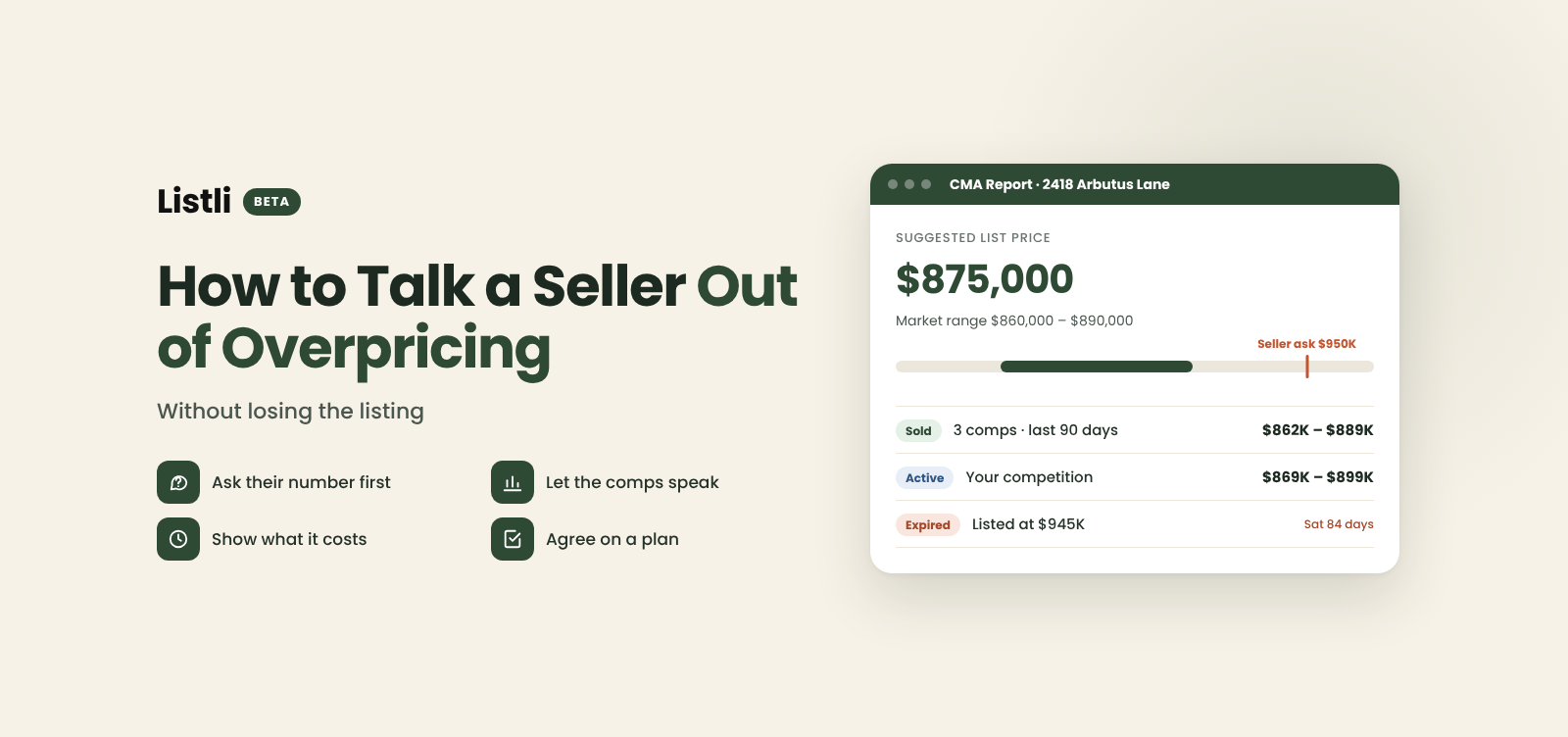
Building this side-by-side view by hand takes time. Listli pulls your sold, active and expired comps from MLS® data into one clean report, so the seller can see the whole market at once. See what a finished report looks like.
Step 3: Show what overpricing actually costs
"We can always come down" sounds low-risk to a seller. Your job is to show them the risk.
Buyers search in price bands. Most buyers set a search ceiling. A home worth $875,000 listed at $925,000 drops out of the searches of buyers capped at $900,000, which is the group most likely to buy it.
The first few weeks matter most. A new listing gets the most attention when it first hits the market. If it's priced high during that window, the most motivated buyers see it, compare it, and move on.
Days on market become a story. The longer a home sits, the more buyers wonder what's wrong with it. That doubt shows up in the offers.
Price reductions chase the market. Sellers who start high often end up reducing in steps, and can finish lower than if they had priced right from day one.
The appraisal still has to work. A buyer using mortgage financing needs the lender's appraisal to support the price. An inflated price can fall apart at that stage.
Step 4: Ask questions instead of arguing
When a seller pushes back, the instinct is to defend your number. Resist it. Questions move people further than arguments, because the seller does the reasoning themselves.
A few that work well for me:
"If you were a buyer looking at these three homes, which would you pick at that price?"
"What's more important to you: the list price, or the price you actually walk away with?"
"When do you need to be moved by?"
"How would you feel if we were still on the market in 60 days?"
The timeline questions matter. A seller who needs to be in their next home by spring has far less room to test the market than they think. Connecting price to their own goals shifts the conversation from your number to their plan.
Step 5: Handle the "another agent said more" objection
This is the hardest version of the conversation, and the one that loses the most listings.
Don't criticise the other agent. Instead, ask to see how they reached their number. A price with no comps behind it is a guess. A price with comps can be compared side by side with yours.
Then be honest about the difference. "I could tell you $950,000 too. But I'd rather tell you what I can back up, and get you there with the fewest surprises." Sellers who have been through a price reduction before will recognise exactly what you mean.
Step 6: If they still insist, agree on a plan
Sometimes the seller needs to test the market to believe it. That can be fine, as long as you agree on the terms in advance.
Set a review date. Agree to review pricing after a set period, such as two or three weeks, based on showings and feedback.
Define the triggers. Agree on what will prompt a change. For example, fewer showings than expected, or consistent feedback that the home is priced high.
Put it in writing. A simple note signed with the listing agreement turns a future price reduction from a hard conversation into following the plan you both agreed to.
This keeps the listing, protects your relationship, and gives the market a chance to confirm what your CMA already showed.
When to walk away
Not every listing is worth taking. If the seller's price is far outside your range, they won't agree to a review plan, and they expect you to fund a long campaign, the listing can cost you more than it earns.
A stale listing with your sign on it also markets you to everyone who drives by. Turning it down politely, with your CMA left behind, often brings the seller back after their listing with someone else expires.
Frequently asked questions
What do you say to a seller who wants to overprice their home? Ask where their number came from, then show sold, active and expired listings that address it directly. Use questions about their goals and timeline rather than arguing for your price.
Is it ever okay to list above the CMA range? It can be, if the seller understands the risk and agrees in writing to review the price after a set period. Without that plan, overpricing usually leads to a longer time on market.
How long should an overpriced listing sit before a price reduction? Agree on a review date before you list, often two to three weeks, and base the decision on showings and buyer feedback rather than the calendar alone.
What if another agent quoted a higher price? Ask to see the comps behind their number and compare them side by side with yours. A price with no evidence behind it is a guess, not a valuation.
Final thoughts
The overpricing conversation isn't really about price. It's about trust. Sellers sign with the agent who helps them understand their market, not the one who wins the debate.
Lead with questions, let your CMA carry the evidence, and give the seller a plan they can agree to. You'll keep more listings, and the ones you keep will actually sell. For the full process behind a strong CMA, see How to Create a CMA for a Home Step by Step, or start with What Is a CMA in Real Estate?
That's exactly why I built Listli. It pulls your sold, active and expired comparables from real MLS® data, puts them side by side for adjustment, and turns your analysis into a clean, branded report a seller can follow. When the evidence is easy to see, the pricing conversation gets a lot easier.
Start your 14-day free trial, no credit card required. Listli is live on Vancouver Island, in the Okanagan region, in Calgary, and in Colorado. See if your market is covered.