 May 5, 2026
What Is a CMA in Real Estate? A Complete Guide for Agents
If you’ve been in real estate long enough, you know this is true: pricing is one of the most important conversations you’ll ever have with a client.
After 13+ years as a real estate agent, I’ve seen firsthand how much trust can be built, or lost, during that moment. Sellers want clarity. They want confidence. They want to feel like their agent understands not just the market, but their home in the context of it. That is exactly where a CMA becomes one of the most valuable tools in an agent’s business.
A CMA, or Comparative Market Analysis, is a report used by real estate agents to estimate a property’s likely market value based on similar recently sold, active, expired, or pending listings in the area. In simple terms, it helps agents price a home using real market data rather than guesswork.
For real estate agents, a CMA is much more than a pricing exercise. It is a sales tool, a trust-building tool, and often the difference between winning and losing a listing.
Why a CMA matters in real estate
A well-prepared real estate CMA helps agents explain pricing recommendations in a way clients can actually understand. Rather than telling a seller, “I think your home is worth around this much,” you are able to walk them through comparable properties, local trends, property differences, and how those factors impact value.
That matters because homeowners are often emotionally attached to their property. They may compare their home to the highest sale in the neighborhood without accounting for differences in lot size, updates, layout, condition, or timing. A strong comparative market analysis provides structure for the conversation and gives your pricing strategy credibility.
It also helps protect sellers from two common mistakes: overpricing and underpricing. Overpricing can lead to longer days on market, stale listings, and price reductions. Underpricing can leave money on the table. A proper CMA in real estate helps agents position the property more accurately from the start.
What should be included in a CMA?
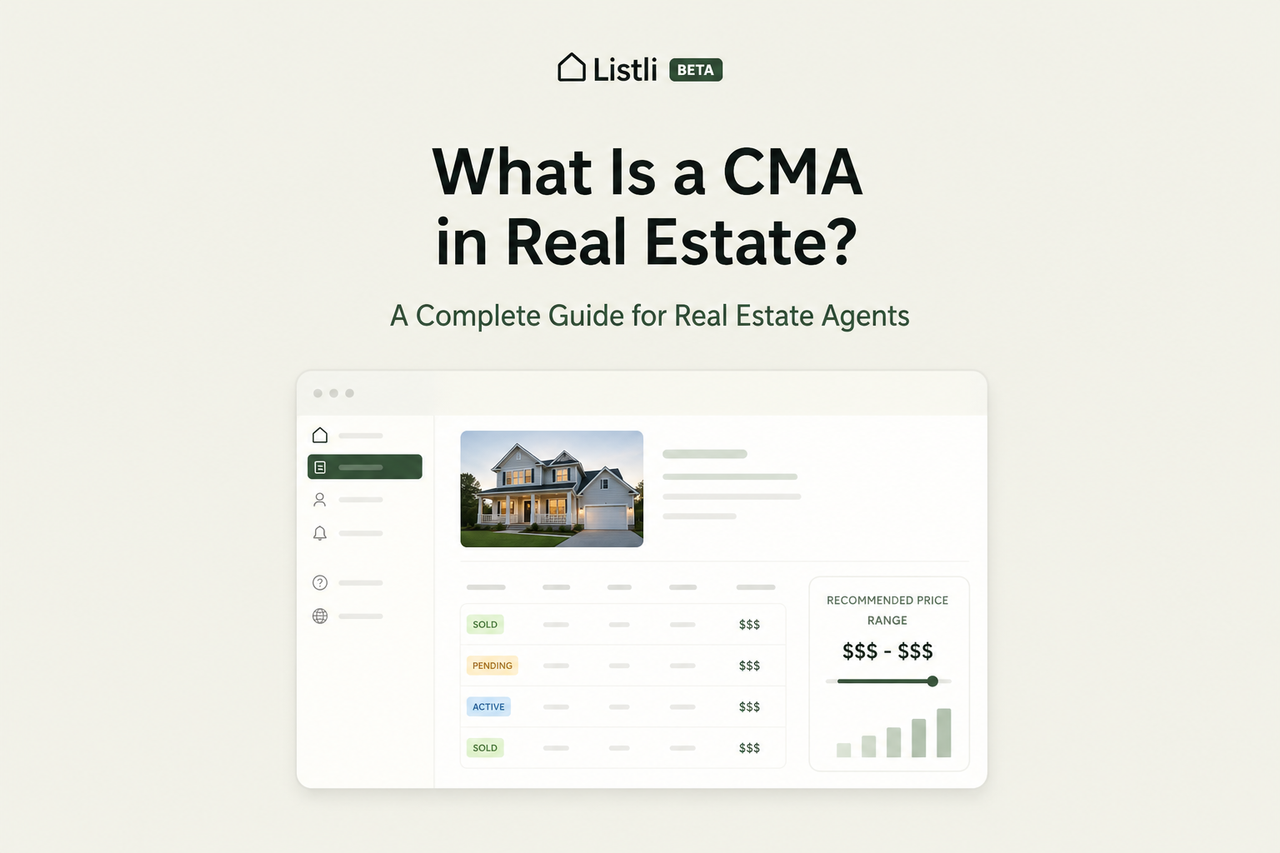
A complete CMA report typically includes the subject property details, recently sold comparable homes, active and pending competition, pricing adjustments based on features and condition, and a recommended price range.
The best CMAs also go further. They provide context. They make it easy for a client to follow the logic behind the recommendation. Clean presentation matters here more than many agents realize. Even accurate data can lose impact if it is presented in a cluttered or confusing way.
That is one reason many real estate agents still struggle with the CMA process. Pulling comps is one part of the job. Turning that information into a polished, client-ready pricing report is another.
CMA vs appraisal: what is the difference?
This is a common point of confusion. A CMA is prepared by a licensed real estate professional to help guide pricing and listing strategy. An appraisal is completed by a licensed appraiser, usually for financing purposes. Both assess value, but they serve different roles.
For agents, the CMA is the tool used in the day-to-day business of winning listings, advising sellers, and demonstrating market expertise.
Final thoughts
At its core, a CMA is not just about determining home value. It is about helping clients make informed decisions with confidence.
As someone who has spent over 13 years in real estate, I built my process around making pricing conversations clearer, faster, and more persuasive. That is exactly why I created Listli. It helps agents build clean, detailed, client-ready CMA reports without the usual friction, so you can spend less time formatting and more time winning business.